
I have been going to the same dentist for over 20 years. He is an hour away from where I live now. I still make the drive every six months. That probably tells you two things: I found someone I trust completely, and I am apparently one of those rare humans who genuinely enjoys getting a cleaning. (Yes, we exist. No, we are not normal. Yes, we know.)
What I have noticed across two decades of visits is how much has changed in that office. The X-rays went digital. Scheduling moved to an app. Records that used to live in a manila folder now live in a cloud-connected practice management system. All of that is progress, and almost all of it quietly expanded the attack surface in ways that my dentist (who is extraordinarily good at teeth) has probably never once thought about.
He is not alone. And if you manage a dental practice, this post is for you. Because when your cyber insurance renewal lands in 2026, you are going to find it looks nothing like it did three years ago.
The Bar Has Moved… Significantly
Cyber insurance underwriters spent the last several years getting burned. They issued policies based on self-reported questionnaires, then paid out massive claims when forensic investigations revealed the control practices they claimed to have were either missing or barely functional. The industry adjusted.
In 2026, the application process functions more like a technical audit than a form. Carriers want evidence, not attestations. Screenshots. RMM exports. Documentation that your controls are deployed, tested, and maintained. Not just checked off on a PDF.
For healthcare providers, this shift is especially pointed. Ransomware attacks on the healthcare sector surged 58% in 2025, with dental practices increasingly in the crosshairs.
Becker’s Dental Review documented 15 significant data breaches impacting dentistry in 2025 alone. Chord Specialty Dental Partners had 173,000 patient records exposed via email. Westend Dental paid a $350,000 regulatory settlement after delaying breach notification to patients. These are not enterprise health systems. These are practices that look a lot like yours.
What the Application Actually Asks Now
If you have not looked at a current cyber insurance application for a healthcare organization, prepare yourself. The questions have gotten specific. Here is what major carriers are probing in 2026:
Multi-factor authentication (MFA)
Not “do you have MFA” — but where, on what, and for whom. Email. Remote access. Admin accounts. Cloud consoles. Your practice management software. Insurers now treat absent MFA as a near-automatic disqualifier. If anyone on your team can log into your EHR from home with just a username and password, that is a gap your underwriter will find.
Endpoint detection and response (EDR)
Full coverage required: every workstation, every server, including the one in the back office that runs the X-ray software and has not been touched since 2019. Active monitoring and documented agent health are part of the ask, not just installation.
Backup strategy
The question is no longer whether you back up. It is whether ransomware can reach your backups. Immutable, offsite, air-gapped, and tested. Carriers want to see that you have run a restore and documented it.
Incident response plan
A written plan with a recent tabletop exercise. Not a binder on a shelf, but something your team has actually walked through in the last 12 months.
Patch management
A documented program with defined SLAs. Imaging software that is two years behind on updates is a material underwriting concern.
Third-party vendor management
Every vendor with access to patient data needs a current Business Associate Agreement (BAA). Underwriters are asking about this systematically now, and “we have them somewhere” is not an answer they accept.
One more thing worth knowing: if you attest to controls on your application and a claim triggers a forensic review that finds something different, the carrier can deny the claim.
What Drives Premiums Up
For a solo dental practice with solid controls, annual premiums typically run $1,000 to $2,500. Group practices pay $2,500 to $8,000 or more. Healthcare is one of the most expensive verticals to insure, running 60 to 120 percent above the national SMB average.
Several factors push your number higher:
Patient records volume. The more ePHI you store and process, the higher your exposure classification.
Prior incidents, even ones that never made it to HHS breach databases are part of underwriting due diligence.
Missing controls from the list above. Each gap is a premium multiplier.
No HIPAA risk assessment on file.
Legacy or unpatched systems on the network.
Staff without documented security awareness training.
Unencrypted email used for patient communications. This is both a HIPAA violation and a red flag on any application.
The average cost of a healthcare data breach reached $7.42 million in 2025. That is the highest of any industry. Insurers price that exposure into every healthcare policy they write.
Three Investments That Reliably Lower Costs
You can bring your premium down, but you do it before the application, not after. The investments underwriters respond to most consistently are the same three controls that stop most attacks.
1. MFA across the board
This is the single highest-return security investment a dental practice can make. It blocks the vast majority of credential-based attacks and it is directly visible to underwriters on the application. Techvera’s Cybersecurity services include MFA deployment and enforcement across your full environment, including email, EHR, remote access, and cloud systems.
2. EDR on every endpoint
Underwriters want coverage percentages, not partial deployment. If five of your six workstations have EDR but the front desk computer does not, that gap shows up. Techvera’s managed security stack includes EDR with continuous monitoring and documented health reporting. This is the kind of evidence that answers underwriter questions before they ask them.
3. Immutable, tested backups
This is the control that most directly limits your exposure when something does go wrong. Air-gapped backups that ransomware cannot reach, combined with documented restore testing, reduce your expected loss in a carrier’s model. Techvera’s Business Continuity & DR practice is built specifically around this: offsite, immutable, tested, and documented.
Beyond those three, a formal Compliance Readiness assessment that maps your environment against the HIPAA Security Rule gives you documentation that carries real weight with underwriters. The 2026 HIPAA Security Rule updates eliminated the distinction between required and addressable safeguards. Everything is now required. An assessment that shows you understand that, and have acted on it, is a material differentiator at renewal time.
Before You Renew: A Practical Checklist
If your renewal is coming up in the next 90 days, here is where to focus first:
Audit MFA coverage. Every user, every access point, no exceptions.
Confirm EDR is deployed and actively reporting on every device on the network.
Document your last backup restore test. If you have not done one recently, run one and write it down.
Pull your Business Associate Agreements and confirm every vendor with ePHI access has a current BAA.
Review your incident response plan. If it has not been tested in the last 12 months, schedule a tabletop.
Get a HIPAA risk assessment documented before you fill out the application.
The practices that come to renewal with documentation ready move through underwriting faster and pay less. The ones that show up with a checkbox form and nothing else are the ones who get surprised.
Get Ahead of Your Renewal
My dentist is still the best I have ever found. I will keep making that drive for as long as he will have me. But the practice he runs today — with digital records, cloud-connected scheduling, and a network that touches half a dozen vendor systems — is a materially different risk environment than the one I walked into 20 years ago. The same is true for every dental practice operating in 2026.
If your cyber insurance renewal is on the horizon, Techvera offers a free gap assessment built for healthcare organizations. We will tell you exactly where you stand before your underwriter does — and help you close the gaps that matter most.
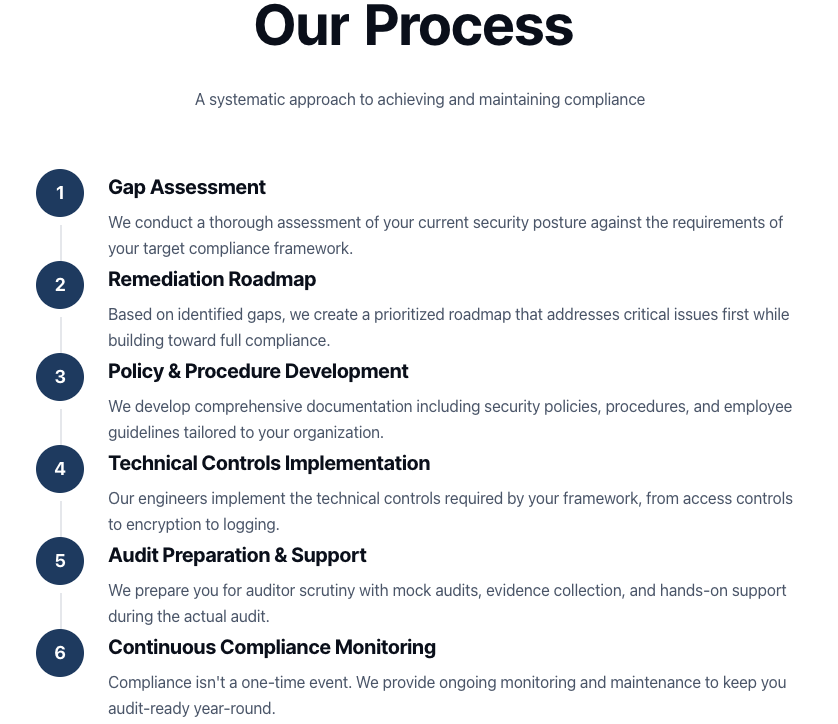
Ready to get audit-ready? Schedule your Techvera gap assessment today.
About the Author
Andrew Rowe
Marketing & Growth
Andrew Rowe focuses on marketing & growth at Techvera, helping organizations understand the strategic value of managed IT services.